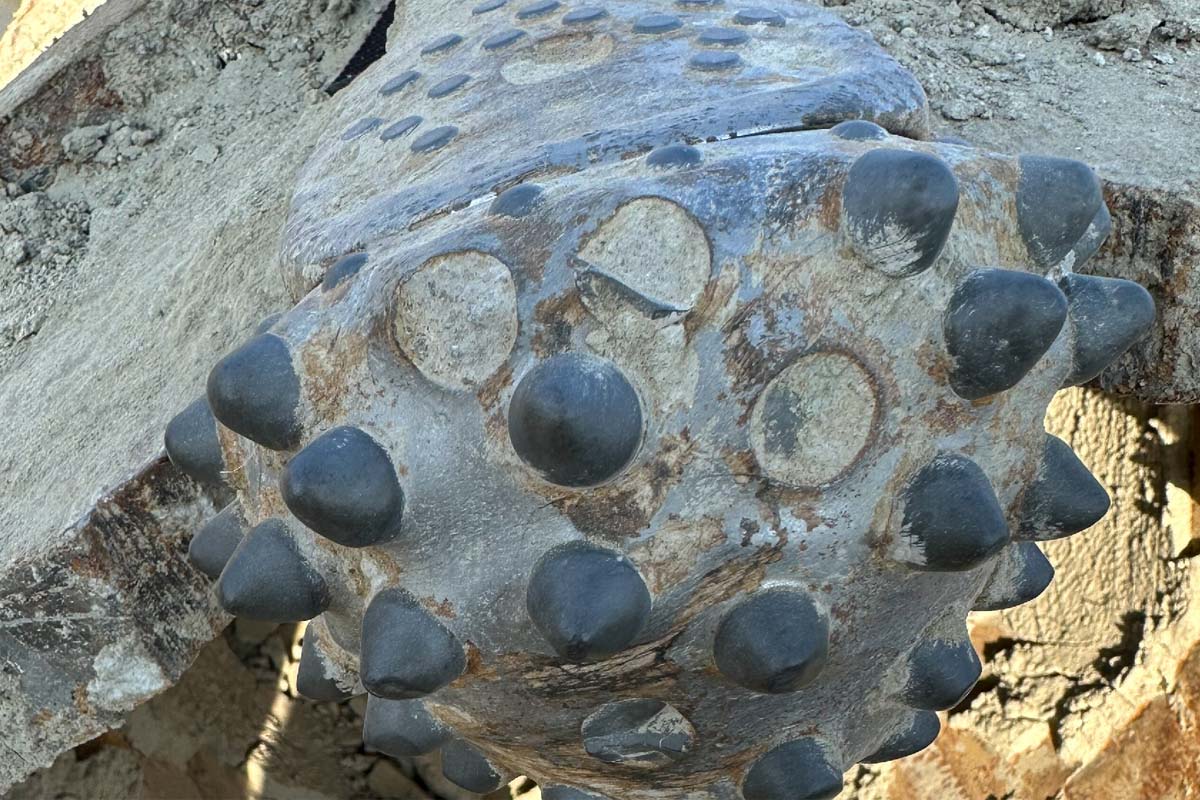
If your piling roller bit keeps failing faster than expected, the problem is usually not just the rock. In real piling and foundation drilling projects, most roller bit failures come from small details that are often ignored on site. Things like:
These issues can quietly destroy a roller bit long before its normal lifespan. In this guide, we'll break down the real reasons behind fast roller bit wear — in a more practical, on-site way.
Bad Welding Position on the Core Barrel
One of the most common problems in piling drilling is incorrect roller bit positioning during welding. If the welding angle or alignment is slightly off, the roller bit cannot contact the rock evenly during drilling. This creates concentrated stress on one side of the roller bit, which can lead to:
In severe cases, the entire roller bit assembly may separate from the core barrel during drilling
Poor Bearing Quality
The bearing system is the core component of a roller cone bit. Once the bearings fail, the cones cannot rotate smoothly, leading to rapid wear throughout the entire bit. Common warning signs include:Abnormal vibration / Excessive heat / Loud drilling noise / Reduced penetration rate
Many low-cost roller bits reduce manufacturing costs by using lower-grade bearings. Although they may look similar externally, the actual service life can be very different.
Wrong Roller Bit Selection
Not all piling roller bits are designed for the same ground conditions. Using the wrong roller bit in the wrong formation can dramatically shorten bit life.
1.Soft formation bits wear quickly in granite 2.Aggressive teeth may chip in fractured rock 3.Incorrect cone structures cause uneven wear
Choosing the right piling roller bit for the geology is critical for drilling efficiency and durability.
Excessive Drilling Pressure
Many operators believe that increasing drilling pressure will improve drilling speed. However, excessive pressure is one of the fastest ways to damage a piling roller bit. Too much pressure creates continuous impact loads on the teeth and bearings, causing:
Especially in hard rock drilling, aggressive drilling often reduces overall drilling efficiency instead of improving it.
How Much Roller Bit Wear Is Too Much?
Not all roller bit wear means the bit must be replaced immediately. In piling and foundation drilling, some wear is completely normal — especially in hard rock formations. But once the wear reaches a certain point, continuing to drill can seriously damage drilling efficiency and even create safety risks.
Normal Roller Bit Wear vs. Abnormal Wear
Normal wear usually looks like:
1.Slight tooth rounding 2.Even wear across the cones 3.Minor surface abrasion
This type of wear is expected during hard rock drilling and does not immediately affect performance.
Common abnormal wear signs include:
1.Missing or broken teeth 2.One cone wearing much faster than others 3.Cracked welds 4.Cone wobbling
These usually indicate structural or operational problems.
When Should You Replace a Piling Roller Bit?
The teeth lose most of their cutting shape
Drilling speed drops significantly
The cones no longer rotate smoothly
The bearing becomes unstable
Weld cracks begin expanding
The roller bit starts vibrating heavily
Why Continuing to Use an Overworn Roller Bit Is Risky
Many contractors try to “push one more hole” before changing the roller bit. But an overworn roller bit can create much bigger problems:
Damage to the core barrel
Excessive machine vibration
Higher fuel consumption
Lower drilling accuracy
Increased risk of roller bit separation
In hard rock drilling, a failed roller bit can sometimes cost far more than replacing it earlier.
Looking for Heavy-Duty Piling Roller Bits?
Built for hard rock drilling, deep foundation projects, and demanding piling applications. Explore more: http://45.207.206.222/roller-bit/